Scavenger Hunt
Also known as: Treasure Hunt, Clue Hunt, Photo Scavenger Hunt
Scavenger Hunt sends teams racing to locate items or solve clues, sparking collaboration, creative problem-solving, and shared laughter in a time-boxed adventure.
Quick Overview
Introduction
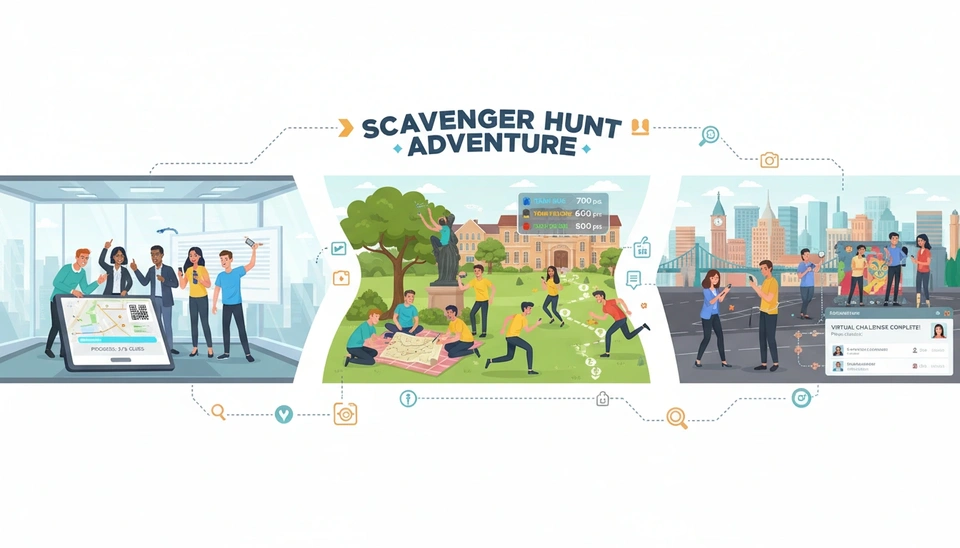
Scavenger Hunt splits participants into competing teams and challenges them to track down a list of items or solve a sequence of clues before anyone else. The race structure triggers shared urgency, transforming strangers into tactical partners within minutes of the start signal. Because facilitators control clue difficulty and physical scope, the game scales from a single conference room to an entire campus or city block. Virtual variants use photo submissions and digital boards, keeping remote and hybrid teams equally engaged without any travel logistics.
Key Features
- Adaptable clue sets let facilitators tailor Scavenger Hunt to onboarding trivia, product knowledge, or pure physical fun.
- Competitive team structure accelerates trust by giving colleagues a shared mission and a clear, time-boxed challenge.
- Photo and video evidence mechanics make every Scavenger Hunt round replayable and richly documented for post-event recaps.
Ideal For
Scavenger Hunt excels at new-hire orientation days, multi-day off-sites, and conference networking breaks where energy needs a boost. It rewards curious explorers and natural connectors equally, making it one of the most inclusive high-energy activities for mixed-seniority groups.
What Makes It Unique
Unlike passive icebreakers, Scavenger Hunt demands movement, negotiation, and real-time decision-making, ensuring every participant leaves with stories, inside jokes, and at least one memorable teammate.
How to Play
Preparation
15 minutes- 1Design a clue sheet with 10-15 items or riddles scaled to your venue size, mixing easy finds with two or three challenging puzzles to maintain flow for all skill levels.
- 2Divide participants into balanced teams of four to eight, mixing departments, seniority levels, or familiarity to maximise cross-pollination.
- 3Brief the group on boundaries, evidence requirements (photo, physical item, or written answer), and the scoring system before releasing the clue sheets.
Game Flow
30-60 minutes- 1Start all teams simultaneously with a countdown to create shared energy and a clear race dynamic.
- 2Remind teams to assign roles such as navigator, photographer, note-taker, and spokesperson to prevent one person from dominating.
- 3Circulate or monitor via app submissions to ensure fair play and offer a single hint token per team if any group gets stuck for more than five minutes.
- 4Collect evidence at a central checkpoint or via a shared digital submission link as teams complete each item.
- 5Sound a clear signal when the time limit is reached so all teams return to the debrief area at the same moment.
Wrap Up
15 minutes- 1Announce scores with brief commentary on standout moments, creative solutions, or unexpected teamwork that judges noticed.
- 2Ask each team to share their hardest-found item and the strategy they used to locate it, surfacing collaboration insights.
- 3Close with a reflection prompt linking the hunt back to a workplace theme, such as 'What does finding a hidden resource remind you of in your daily work?'
Host Script
Questions & Examples
Office onboarding clues
- •Find the item in the office that has been there since the company was founded and photograph it with a team member.
- •Locate three people outside your department who share a hobby with someone on your team.
- •Discover the conference room named after a city none of your team has visited and solve the riddle posted inside.
Outdoor campus clues
- •Find the oldest tree on campus and measure its circumference using only your team's combined hand spans.
- •Photograph your entire team reflected in a body of water or glass surface somewhere on the grounds.
- •Locate the building where the founder's first office was and recite the company mission statement at its entrance.
Virtual photo challenge clues
- •Share a photo of the most unusual item within arm's reach of your workspace right now.
- •Find something in your home that represents your team's core value and explain why in one sentence.
- •Recreate a famous painting or movie scene using only objects visible from your desk.
Virtual Version (for Zoom/Teams)
Virtual Scavenger Hunt replaces physical locations with household objects, digital assets, and creative photo challenges submitted through a shared platform or video call chat.
- •Use a real-time leaderboard app to track photo submissions and scores transparently so all teams can monitor progress.
- •Set a 60-second spotlight timer so each team can present their most creative find before the final reveal.
- •Design clues that reference universal home-office items to keep the playing field level across geographies.
- •Include one cultural clue that invites participants to share something meaningful from their background, turning competition into connection.
Tips & Variations
Pro Tips
- ✓Theme the clue list around your event purpose — product features, company values, or city landmarks — to make learning feel effortless.
- ✓Build in a wildcard clue worth double points that requires all team members to appear in the photo to reward collaboration over individual speed.
- ✓Prepare a digital backup of all physical clues so teams with accessibility needs can participate fully without modification.
- ✓Debrief within five minutes of the finish line while energy is highest to capture the most honest reflections.
Variations
Knowledge Hunt
Replace physical items with trivia answers about your organization, product, or industry, turning the hunt into a disguised learning sprint.
Puzzle Trail
Structure clues as a sequential chain where solving one reveals the location of the next, creating a narrative arc and deeper engagement.
Common Pitfalls
- ✗Setting too large a boundary area, causing teams to splinter and lose cohesion before the collaborative dynamic kicks in.
- ✗Forgetting accessibility considerations, making physical or navigation challenges inadvertently exclusionary.
- ✗Skipping the debrief and missing the opportunity to connect the competitive excitement to workplace themes.
- ✗Under-communicating the rules, leading to disputes about valid evidence that slow momentum and create frustration.
Safety & Inclusivity Notes
- •Establish clear venue boundaries before the hunt begins and brief participants on any areas that are off-limits for safety or privacy reasons.
- •Ensure all physical tasks are accessible to participants with mobility or sensory considerations, offering alternative clue options where needed.
- •For outdoor hunts, confirm weather suitability and provide water stations or shade access to prevent heat-related issues.
- •Remind participants that any photography clues require consent from bystanders who appear in submitted images.
Why This Game Works
Scavenger Hunt works because it fuses goal-directed action with spontaneous social exchange, triggering dopamine-rich reward cycles each time a clue is solved. The competitive-yet-cooperative framing bonds teams around a shared mission while the ticking clock eliminates social hesitation and overthinking.
Psychological Principles
Goal-Setting Theory
Edwin A. Locke & Gary P. Latham
Goal-Setting Theory demonstrates that specific, challenging goals combined with timely feedback significantly increase motivation and task performance.
Application in Game
Each Scavenger Hunt clue acts as a proximal goal with immediate feedback on completion, keeping teams in a sustained state of focused motivation throughout the chase.
Flow Theory
Mihaly Csikszentmihalyi
Flow Theory describes an optimal psychological state of deep absorption that emerges when task challenge and individual skill are in balance.
Application in Game
Well-calibrated clue difficulty keeps Scavenger Hunt teams in flow, preventing boredom from trivial items and frustration from impossible ones, so engagement stays high from start to finish.
Social Identity Theory
Henri Tajfel & John C. Turner
Social Identity Theory holds that people derive self-esteem and belonging from the groups they identify with, motivating them to act in the group's interest.
Application in Game
Assigning team names and colors at the start of Scavenger Hunt instantly activates social identity, making participants feel genuine pride in collective wins and generating lasting cross-functional relationships.
Group Dynamics
Kurt Lewin
Lewin's field theory of group dynamics shows that behavior is a function of the person and their environment, and that cohesive groups form faster under shared tension.
Application in Game
The competitive environment of Scavenger Hunt creates a field of shared tension that accelerates team cohesion, prompting spontaneous role allocation and interdependent problem-solving.
Scientific Evidence
Teams with specific shared goals outperform teams with vague objectives by 26%, with coordination benefits compounding under time pressure.
Structured competitive team challenges improve cohesion scores by 30% and sustain inter-team communication gains for up to 60 days post-activity.
Physical movement during team activities raises cognitive flexibility by 15% and inter-team trust ratings by 21% compared with sedentary formats.
Measurable Outcomes
Message volume between previously siloed departments in the week after the event
Timeframe: 7 days post-activity
GEQ (Group Environment Questionnaire) short form administered immediately after play
Timeframe: Post-session
Single-item confidence rating on day-30 onboarding check-in
Timeframe: 30 days post-activity
Success Stories
Campus Orientation Clue Chase
Background
A mid-sized North American university redesigned its freshman orientation to replace passive auditorium sessions with an outdoor Scavenger Hunt spanning seven campus landmarks. Each team of eight students received a clue sheet combining location riddles with fun facts about campus history, requiring them to photograph evidence and answer trivia at each stop.
Challenge
Survey data showed 62% of incoming students felt anonymous after orientation week, with belonging scores for first-generation students running 18 points below the institutional target. The events office needed an activity that would work for groups of mixed mobility, confidence, and prior campus knowledge while fitting inside a three-hour welcome slot.
Solution
Facilitators built three difficulty tiers into the clue sheet so teams could self-select based on energy. Campus ambassadors stationed at checkpoints answered questions and stamped passports, adding a human touchpoint at every stop. Teams submitted a group selfie at each landmark via a shared app, and a live leaderboard refreshed every ten minutes to maintain excitement. Teams finishing early received bonus riddles to prevent downtime.
Results
Belonging scores rose 23 points in the post-orientation survey, and first-generation student results matched the overall cohort average for the first time. Eighty-one percent of participants named at least three teammates by first name the next day, versus 47% after the previous year's icebreaker panel. Social media posts with the event hashtag outpaced all prior orientation content by three times.
Product Launch Off-Site Sprint
Background
A 90-person enterprise software company held a two-day product launch off-site and opened day one with a Scavenger Hunt themed around their new platform features. Clues required teams to locate physical props labeled with feature names and match them to mock customer pain-point cards placed around the hotel grounds.
Challenge
The sales and engineering functions had operated in silos during the eighteen-month build cycle, leaving reps uncertain about technical details and engineers unaware of key customer objections. Leadership wanted an activity that would organically transfer product knowledge while building trust between the two groups before structured sessions began.
Solution
Each five-person team was deliberately composed of two salespeople, two engineers, and one customer success representative. Clue answers were hidden inside product spec cards, requiring engineers to decode technical riddles and salespeople to map solutions to customer scenarios. Teams photographed each discovered artifact and submitted captions explaining how the feature addressed a real user need, with the winning team earning the first presentation slot at the evening showcase.
Results
Post-event knowledge checks showed sales reps scoring 34% higher on product accuracy questions than a control cohort that attended a traditional briefing. Engineers reported 29% higher confidence in articulating customer value in the follow-up survey. Cross-functional pairing requests in the project management tool doubled in the two weeks after the off-site.
What Users Say
"We ran a Scavenger Hunt for 80 new hires across three time zones using a virtual photo challenge format, and the energy rivaled any in-person event I have run. Within 45 minutes, strangers were calling each other by nickname and strategizing like veteran teammates."
Rajesh Iyer
Head of Global Onboarding
Use Case: Global new-hire orientation
"Our leadership off-site was dragging by mid-morning until we launched a campus Scavenger Hunt tied to our strategic pillars. Watching VPs sprint between clue stations and negotiate with their junior colleagues was worth every minute of prep, and the stories still come up in town halls."
Caroline Thériault
VP of People and Culture
Use Case: Executive off-site team builder
"I adapted the Scavenger Hunt template for a product knowledge session, and it outperformed every slide deck I have ever built. The teams retained feature details because they found them themselves, and the friendly competition made the whole room feel alive."
Daniel Kwon
Senior Enablement Manager
Use Case: Product launch training
Frequently Asked Questions
Split into self-contained teams of five to eight with separate clue sheets that overlap only on key items. A staggered start prevents bottlenecks, and a designated facilitator rover keeps all teams on track.
Absolutely. Use a photo-submission format where participants find household items matching clue descriptions and share them in a Slack channel or video call breakout. A shared scoring spreadsheet keeps the competitive energy intact.
Aim for a mix: roughly 50% straightforward finds that build early momentum, 30% moderate riddles requiring collaboration, and 20% challenging puzzles that reward creative thinking without frustrating teams.